

When the Bell Rings – 1a
Maricosta International School has, for over twenty-five years, been a place where learning and community have flourished side by side. Serving the children of diplomats, international business leaders, NGO professionals, and an increasing number of local families, the school has become a trusted educational hub in the capital.
The spacious, leafy campus on the beautiful southern coast provides an oasis of calm and safety yet sits just a kilometre away from the bustle of city life. Its modern facilities comprise diverse learning spaces that open out onto courtyards and a field where students of more than 50 nationalities learn, play, and grow together.
Maricosta International School enjoys a strong and respectful relationship with the host government, working in partnership to support education in the country while retaining the independence and diversity that define international schooling. Families appreciate the excellent academic results of students—with graduates regularly moving on to leading universities worldwide—and the high quality of our teachers, who combine professional expertise with a deep commitment to student well-being. The school is proud of its achievements in helping students fulfill their potential.
What makes Maricosta International School especially distinctive, however, is its atmosphere. Known for being easy-going, warm, and inclusive, the school feels like a home away from home for our families, staff, and alumni. It is a place where high standards and joyful learning live comfortably side by side, and where every member of the community feels that they belong.
Maricosta International School is an accredited institution.
On the website, Dr Dahlia Potts read the introduction to the school for which she was now responsible. On this, her first day as Principal, she wondered how she could ensure that the school maintained its fine reputation….
The Board had selected Dahlia after an extensive search and each member was hoping that she would be the one to take the school to the next level, that is after she had addressed some known issues. The board Chair, Hugo Grün, had shared key ideas about the board’s vision and elements of the strategic plan with Dahlia during the interview. Now, he was on his way to her office for their first formal meeting after a most enjoyable welcome dinner for Dahlia that he and other board members had hosted. The topic of their meeting was the upcoming retreat.
See content credentials
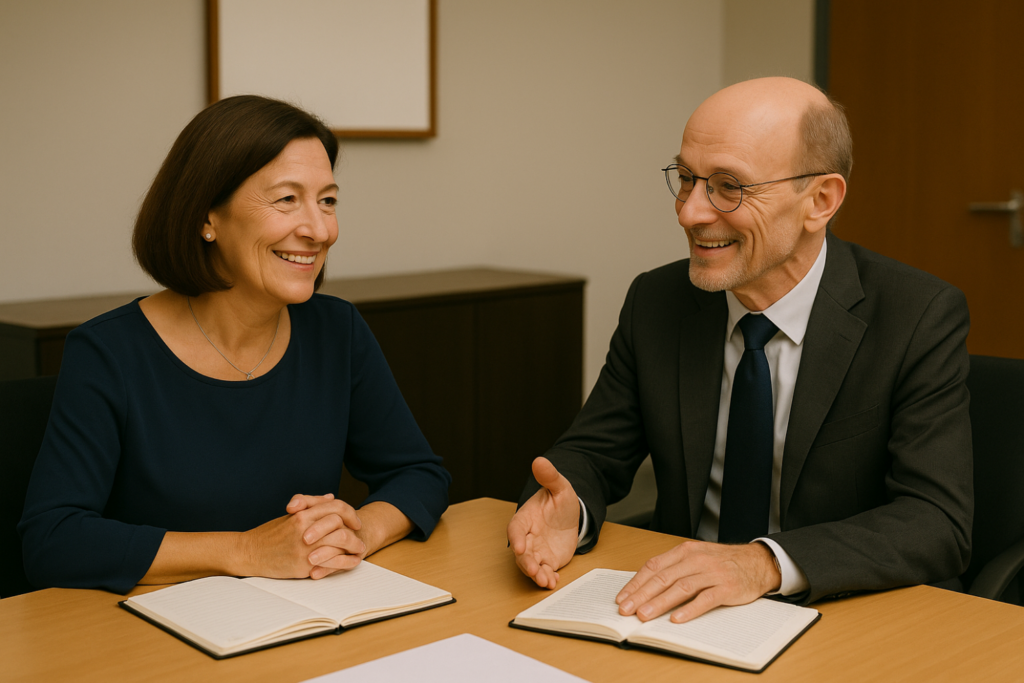
Dahlia began by thanking Hugo for the dinner the previous evening. Hugo acknowledged her thanks and explained that he and the other board members wanted to connect before their schedules became too busy. He then turned the discussion to the upcoming retreat, emphasizing the need to focus on the strategic plan to clarify priorities and timelines, noting that board members were eager for her to engage with the goals.
Dahlia agreed that the strategic plan was critical and explained that, as she had not been involved in its development the previous year, she needed to understand the board’s perspective. She also proposed including a session on the roles and responsibilities of the board and the Principal, highlighting that, as a new principal reviewing the policy manual, she saw a lack of clarity and the retreat was an ideal opportunity to strengthen their understanding.
Hugo acknowledged her point but expressed concern that combining governance discussions with strategic planning could dilute focus. Dahlia argued that the two were closely connected, noting that unclear roles, responsibilities and expectations could undermine the execution of the strategic plan. She provided examples such as enrollment and class size targets, budget approval, and fundraising activities, all of which could overlap without clear boundaries. She also knew from experience that the list of examples could have been much longer.
After considering her perspective, Hugo suggested dedicating the morning of the day retreat to governance, covering roles, responsibilities, and expectations, with the afternoon focused on the strategic plan. Dahlia agreed on this approach, noting that it would help ensure alignment and more effective strategic discussions. Dahlia offered to draw up an agenda.
See content credentials

The meeting concluded with both leaders confident that the retreat would achieve a balance between governance clarity and strategic aims.
How do you think Dahlia handles this? How do you think the retreat will go? We’ll see in the next article
When the Bell Rings – 1b

On the morning of the Board Retreat, Dahlia was enjoying an early morning cup of coffee on her balcony looking out over the ocean as the sun tried to push through the morning mist. Dahlia had two goals for the retreat coming up. The first was to ensure a shared understanding of the respective roles and responsibilities of the School Principal and the Board, as well as those areas where responsibility would be shared. For this to be agreed, open dialogue on all key matters was needed. Second, Dahlia wanted to ensure that the Board understood that the strategic plan she had inherited was now in her hands to execute. Related to this, she hoped that at a later date and when she was more familiar with the school, she would have some input on the strategic goals.
The retreat opened in a spirit of optimism as everyone warmly welcomed Dahlia. Yet, as board members chatted about the day ahead, the very issue she had anticipated surfaced in their opening conversations. Several well-meaning board members began to cross the line from governance into management: One raised concerns about the performance of an individual teacher. Another questioned a recent admissions decision involving a specific family. A third began suggesting which administrative software the school should adopt. Dahlia listened attentively, her expression calm, though inwardly she knew how easily the lines between governance and management could blur. The goodwill behind these comments was clear, but so too was the overreach.
Hugo sensed the situation in the room and invited Dahlia to share her perspective, drawing on her experiences from previous schools and her accreditation work. She explained the rationale for distinguishing roles and responsibilities, offering examples where blurred boundaries had led to misunderstanding, slowed decision-making, and unnecessary tension. She concluded by summarising the distinction: the board’s focus was vision, oversight, and accountability, while the Principal’s responsibility lay in the daily operations.

Thinking ahead to the afternoon, she gently reminded the board that her role was to implement the strategic plan that the board had approved and that efficiency depended on clarity of roles and responsibilities.
The discussion carried on through the morning—frank yet respectful, to Dahlia’s relief. Several board members acknowledged that, without a clear policy, they had often been uncertain where their responsibilities ended and the Principal’s began, while one or two others admitted they would have preferred a more hands-on role in some areas. By late morning, however, consensus emerged: the policy manual required revision. Working together, they drafted a framework that clarified responsibilities while reinforcing the spirit of partnership.
The afternoon flowed well with the strategic plan now being discussed through a new lens by all. The session closed amicably with the Board Chair thanking Dahlia for her contributions and for the clarity that had been jointly achieved. For Dahlia, the acknowledgment meant a great deal. She felt the day had marked a promising step toward a stronger partnership and a more focused future for the school.
One week after the retreat, a new policy was formally approved:
Policy: Roles and Responsibilities
- Board – Oversees governance: legal compliance, safeguarding, mission and policy approval, strategic plan and budget approval, capital and fundraising strategy, financial resilience and audit, Principal evaluation, and representing the school.
- Shared – Work jointly on: mission promotion, strategic planning, policy development, long-term enrollment and capital strategy, budget and resource planning, risk assessment, performance monitoring, and stakeholder engagement.
- Principal – Leads management: implements policy, executes strategy, manages staff and learning, oversees daily finances, leads safeguarding implementation, manages risk, handles communications and fundraising, and reports to the Board.
For Discussion
· Do you agree with this division of roles and responsibilities? What, if anything, is missing?
· Would these roles differ in a for-profit school or a large school group? If so, how?
· Have you ever had to realign expectations with a board? How did you approach it?